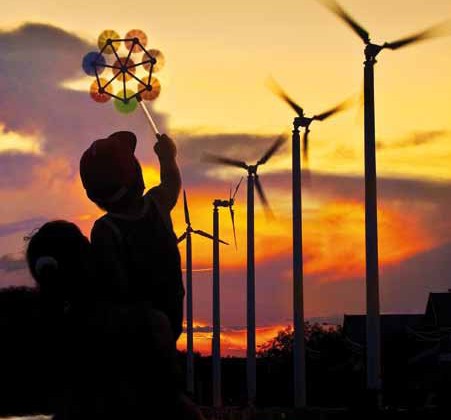
Sustainability …Meeting the needs of the present without compromising the future…
by | Rushdi Abdul Rahim | rushdi@might.org.my
Greetings Dear Readers,
It is my sincere pleasure to bring you the latest edition of myForesight® magazine which focus on the topic that have been discussed at various engagements that we are involved in during the past year – Sustainability.
You would also have noticed the inclination toward this word is so great that you cannot miss it – It’s there whenever you flip the newspaper; it’s on the talk shows and radios, on banners and bunting…everywhere. People are talking about sustainable lifestyle, sustainable economy and growth, sustainable development …and the list goes on. The latest that is being mentioned by our Prime Minister is “Fiscal Sustainability”. He mentioned this during the Global Science Innovation & Advisory Council held in September this year. So what is “Sustainability”? Well literally according to the Merriam-Webster dictionary,
sus·tain·abil·i·ty noun
sus·tain·able adjective
: able to be used without being completely used up or destroyed
: involving methods that do not completely use up or destroy natural resources
: able to last or continue for a long time
Our discussion here at myForesight® simplify the definition of sustainability as “meeting the needs of the present without compromising future”. Sounds familiar? Well this is almost similar to the definition of sustainability which is the cornerstone of Malaysia’s New Economic Model. Therefore the discourse involving sustainability have always revolves around the topic of the need of a change of mind-set, change of lifestyle with the words sustainable consumption and production thrown in for good measure. I guess many of us agree that on our current trajectory, future scenarios will be bleak and therefore change is required to ensure sustainability. In this edition, we provide you with the green technology scenarios of Malaysia in 2030 depicting the role of green technology in ensuring the country’s sustainability. These scenarios were developed in multiple scenario sessions organized by MIGHT and Ministry of Energy, Green Technology & Water.
In various discourse sessions, forums and dialogues, we have stressed before the start of the decade that the key themes of the future of Malaysia will be on mobility, security and sustainability. In fact nothing has happened since then to change our views.
Anyway, the Science Advisor to the Prime Minister kick start this magazine with his view and insight on sustainable development, stressing that maintaining a bio-diverse world is not a hindrance to development – but a fundamental requirement.
Therefore there is a need for us to have different strategies in developing our cities and communities. This edition provides a brief on Malacca Smart City development leveraging on Green Technology and various sustainable development practices. This is complemented by a piece on “Sustainable agro-ecosystem management for rapid and high impact development” the theme for A-Bes 2014 (Agrobiodiversity and Agroenvironment symposium) organized by MARDI.
On a parting note, sustainable development also is a key agenda in Science for Well-Being, a key thrust of Science to Action (s2A) in ensuring that the uptake of science contributes towards the well-being of society and communities.
As usual, we hope you find this magazine beneficial and thought provoking.
We expect you to have your opinion on certain matters. We want to hear them if you are willing to share. We welcome your feedback and contributions