by | RUSHDI ABDUL RAHIM, rushdi@might.org.my
In a highly interconnected world, distance matters less. Modern transportation and logistics have increased global mobility and trade that fuel buzzing world economy. The same shared route, however, has also prompted the spread of myriad diseases. For example, a flu in Hong Kong can quickly become a fever in Los Angeles with just one flight, putting larger populations at risk to an outbreak of pandemic diseases.
With the benefits of modern medicine and hindsight, it is thought that we are more prepared to face disease outbreaks. However, medical capacity, capabilities, facilities and equipment that exist today are unevenly distributed throughout the world. Therefore, there is a need to address this at both global and domestic levels.
In September 2019, the Global Preparedness Monitoring Board (GPMB) released a report of where the
world stands in its ability to prevent and contain a global health threat outlining recommendations to be adopted and taken up. GPMB is co-organised by the World Health Organisation and the World Bank Group, created in response to recommendations by the UN Secretary General’s Global Health Crises Task Force in 2017.
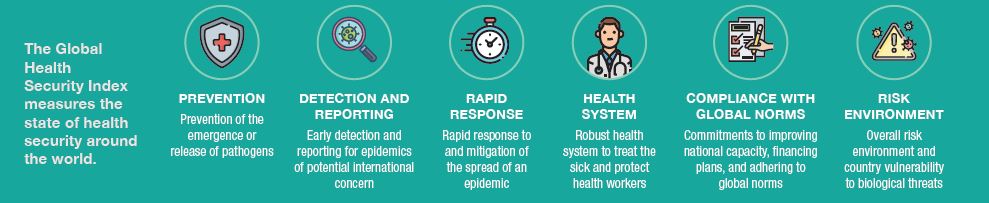
Then, there is the Global Health Security (GHS) Index that assesses world countries’ health security and capabilities across six categories: prevention, detection and reporting, rapid response: health system, compliance with international norms as well as risk environment.
RANKING GLOBAL PANDEMIC PREPAREDNESS
This pre-COVID-19 report found that no country was truly prepared to manage a pandemic
Now, where does Malaysia stand?
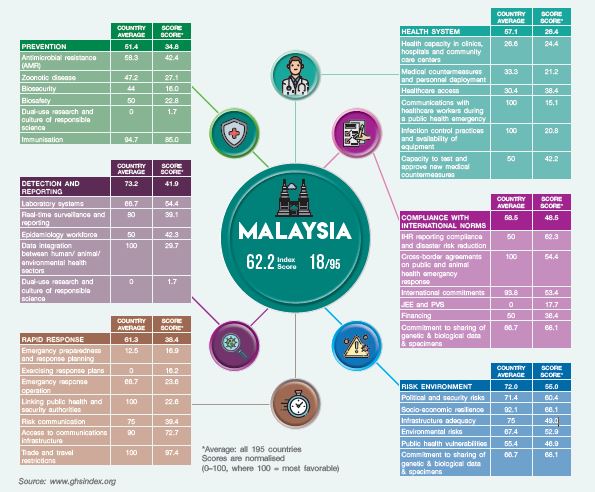
Currently, Malaysia ranks 18th globally and scored above average in all of the areas concerned. Tellingly, Malaysia ranks 16th in the responsiveness agility category and 2nd across emergency response operations’ indicators. Kudos to our front-liners; health care professionals, public safety officials and others. This demonstrates the hard work being laboured to treat and curb the spread of COVID-19.
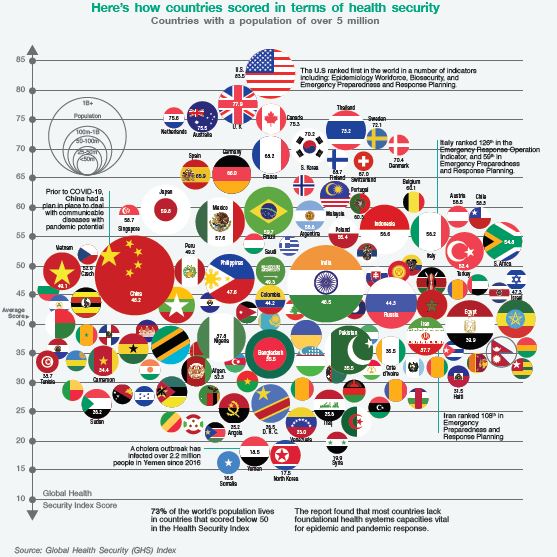
In comparison, Italy ranks 31st overall, 51st in the responsiveness agility category and 129th in emergency response operations. In fact, what’s worrying is that less than 5% of world countries scored high enough to get into the top tier of functional emergency response operations’ capability.
The USA and UK are ranked 1st and 2nd overall respectively. They are also ranked high with excellent scores in response and emergency response operations’ categories. Yet, judging by these countries’ news cycles, death count and infection rise, they are not better off than lesser countries.
According to JP Morgan, as of March-end, Malaysia’s reported mortality rate was 0.77% versus global average of 4.4%. This was attributed to the decisive introduction of risk control measures and border restrictions.
As you can see, the capacity to anticipate and prepare means nothing without the willingness to act. Anticipatory and preparedness capabilities will only take you so far. Above all this, there needs to be a strong desire and willingness to act and take advantage of this preparedness measure.