by | Rushdi Abdul Rahim, rushdi@might.org.my
Greetings and Salutations,
I sincerely hope that you are well and are keeping you and your family safe wherever you are.
At the time of writing, safety restrictions are being implemented across the country, where the pandemic is changing the way many organisations operate for the foreseeable future. Many are now working to transform their workplaces for the new future of work as governments and businesses tell those with symptoms to self -quarantine and everyone else to practice physical distancing. Remote work is our new reality.
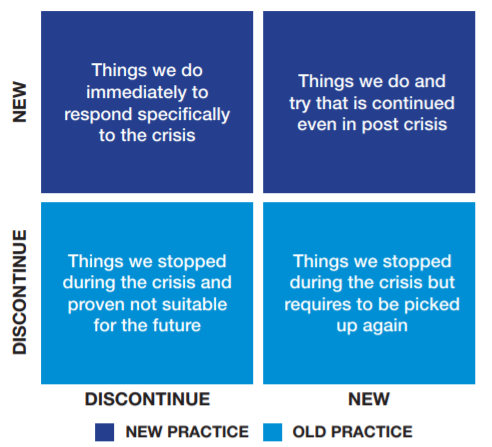
While the pandemic could be temporary, some of the changes it has instigated will be permanent. At MIGHT, we believe organisations should evaluate existing processes and take advantage of new opportunities this crisis brings. Adapting to the new normal will involve identifying what is new and what will discontinue.
The question is, are organisations and their people – both management and employees – prepared for this? Short answer: no. No organisations are set up for the unprecedented scale and scope where work-from-home arrangements had to be made immediately. Of course, there are some organisations that were more ready than others. Those that were quick to adapt had these factors to thank:
We like to give people the freedom to work where they want, safe in the knowledge that they have the drive and expertise to perform excellently, whether they at their desk or in their kitchen. Yours truly has never worked out of an office, and never will.
Sir Richard Branson –
The infrastructure
The organisation and its employees have access to the required hardware and software needed to work remotely, have conference calls, meetings and close collaborations. Everyone has continuous access to the resources they need to be productive as they harness the powers of high-speed internet connection and cloud services.
The policies
Organisations that are more fluid in terms of working structure and laissez faire in their approach tend to adapt faster in employing the remote work approach. This includes supportive policies that recognises the fact that work is not bound by physical and geographical location, and those that emphasise on results rather than physical presence.
The people
Each employee’s skill set, willingness, and trust come into play. Their ability to adapt and adopt, learn and make use of virtual tools available, plus willingness to embrace the new normal allowed them to successfully pivot. There should also ideally be trust that the people will continue to work and be productive. Unfortunately, I have seen so many organisations lacking in these qualities, making it difficult to embrace necessary changes.
So how do organisations move forward and prepare for the future of work in post-pandemic futures?
Accelerate digital transformation
The pandemic has forced many organisations to pick up the pace of their digital transformation projects. The crisis should provide ample justification they need to embark on better digital infrastructure and re-evaluate existing processes and practices related to physical workplace design.
Establish a hybrid work environment
Permanent remote work may not be feasible for all organisations, but a hybrid approach is. Identify which roles and processes that can be performed virtually, as well as which working styles best suit individual employees to ensure optimum productivity.
Embrace micro-events
Organisations will have to reimagine corporate events, conferences, and business travel. Even when restrictions ease, it would be some time before people felt it’s safe to gather in large groups. The pandemic has shown that there is the ability to connect more people at a lower cost where events combine in-person and virtual activities. Therefore, micro-events will likely become the new norm, even after the virus has been contained.
Re-evaluate operational costs and employee benefits
As organisations are faced with economic pressure, there is a pressing need to lower operational costs. With more remote employees, organisations can reduce office space and save on rental and utilities. Employee perks and benefits can be replaced with tailor-made alternatives. Furthermore, without the confines of geography, businesses can hire more diverse talent for less in markets with lower costs of living.
However, the points mentioned above do not constitute a ‘one size fits all’ solution. It is worth noting that not all work could be done virtually. This will depend on the nature of the work and business niche. Which brings us to the question: Why is there a need to evaluate and take stock of the situation, and how does this impact each organisation?
I hope you continue to practice #physicaldistancing and adhere to the necessary standard operating procedures (SOP) being outlined by our health authorities. Stay safe, and stay productive.
DIGITAL TECHNOLOGIES
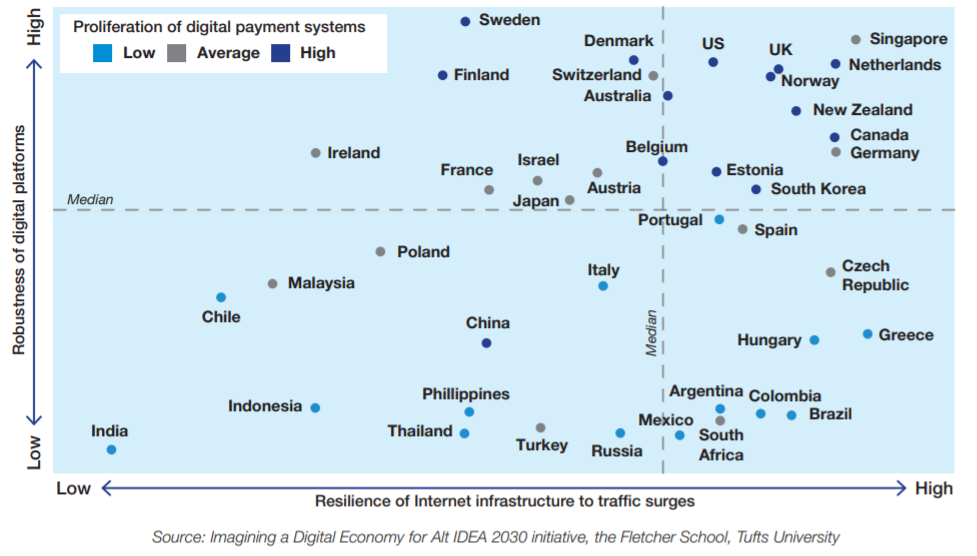
Where Working from Home Works Best
Which countries are well positioned to have their citizens work remotely? Researchers examined how 42 economies stack up on three measures of readiness; the robustness of video conferencing and other digital platforms needed for business continuity, the ability of internet infrastructure to withstand spikes in traffic, and the existence of secure digital payment methods.