by | Mohammad Azreen Firdaus Abd Aziz & Ahmad Hafizi Mohamed@Adam
azreen@might.org.my, hafizi@might.org.my
The United Nations (UN) Climate Change initiated a climate action for sports movement as a guideline to achieve the global climate change goals in line with the Paris Agreement. This initiative managed to attract many sports organisations to be part of it. The first motivation is to drive the global sports community to combat climate change via commitments and partnerships based on the standards including measuring, reducing and reporting. Secondly is to capitalise on the sports platform to federate and inculcate solidarity among the global sports community for climate action.
Various programmes are organised by the UN, such as knowledge sharing and exchange programmes, as well as capacity building, to enhance the understanding of the sports for climate action principles. There are five set principles to be incorporated in the strategies, policies and procedures to be taken up by the sports community.
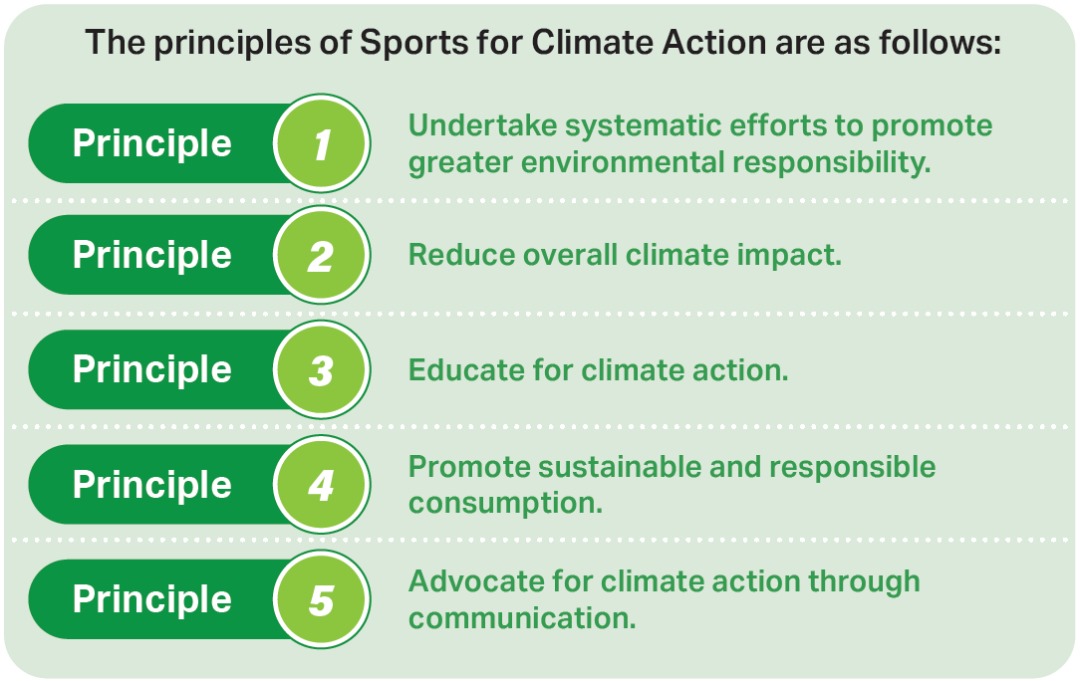
In this context, UN Climate Change will facilitate and coordinate the works undertaken by signatories to Sports for Climate Action.
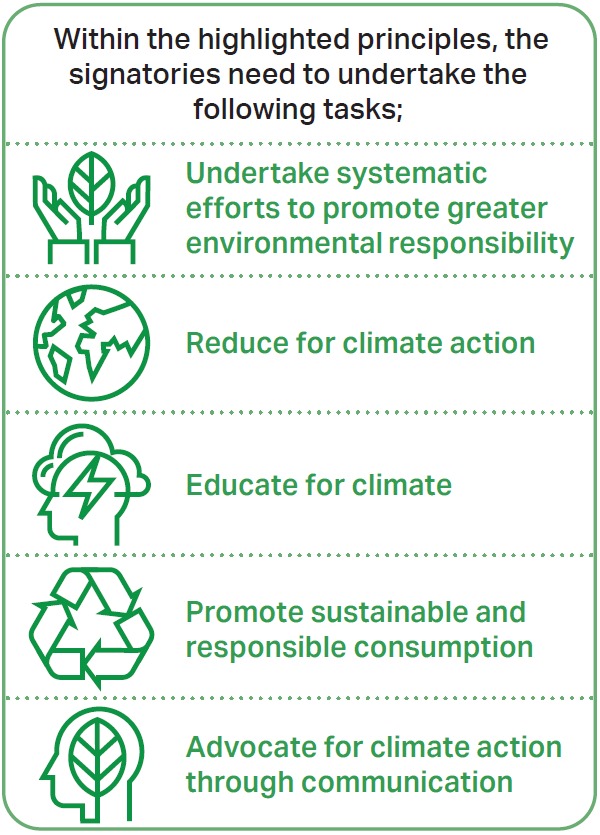
Proceeding into this, the signatories mutually agreed to commit to reducing 50% of Greenhouse Gas (GHG) emissions by 2030 and achieving net zero by 2040. To materialise, the signatories are required to outline 4 key steps which comprise pledge, plan, proceed with action and report. This requires a systematic approach to translating the action as the committed stakeholders need to submit the milestone and plan to the UN Climate Change with immediate action.
In meeting the future demand for physical sports activities, the Malaysian sports community also needs to consider a sustainable development of the net zero sports facility as a part of the initiative to reduce GHG emissions. By setting up a long-term pledge, the organisation can design its plan with realistic actions since the implemented initiatives must be reported annually to the UN Climate Change. The overall process will require detailed evaluation to understand the long-term usage of the facilities by integrating them with sustainable development.
One of the action areas, is to develop a net zero sports facility, which is applicable and more feasible for the green field. Compared to the brownfield, it is essential to have a comprehensive assessment of how the GHG emission is being contributed from the facility, such as the energy being consumed and wasted. Based on the study, it is estimated that an average professional sports stadium will consume 5-10 Megawatt MW of electricity during sports events equivalent to 5,000 American homes. There are a few international benchmark initiatives on developing net zero sports facilities based on the greenfield or brownfield project as follows.
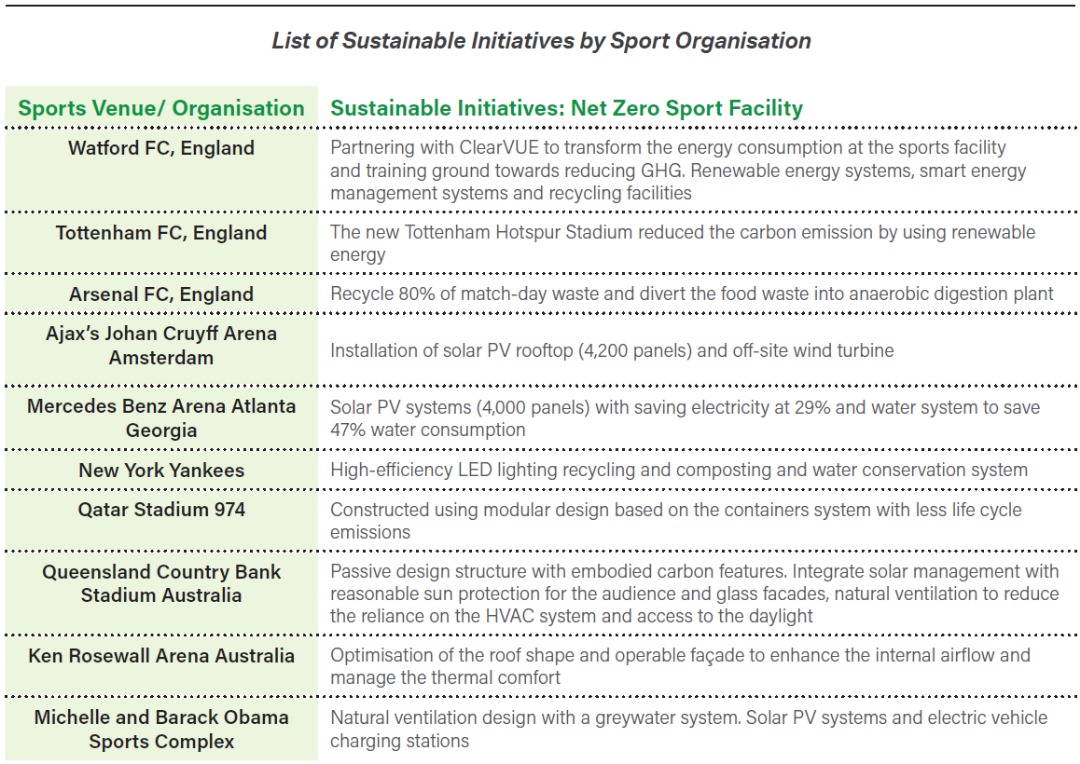
As the list is not extensive, there are other clubs committed to net zero and implemented sustainable initiatives to offset the carbon emissions not mentioned here; they include Forest Green Rovers, Juventus, Vfl Wolfsburg, Hibernian, Liverpool, Manchester United, Chelsea and Southampton.
In principle, the concept design of a net zero sports facility may require various sustainable technology applications to reduce and mitigate GHG emissions such as a solar PV system or other types of renewable energy, rainwater harvesting for water consumption, LED lighting and alternative energy supply such hydrogen modular system integrated with fuel cell or energy storage system to provide supplementary energy to the facility.
The structure of the building can also be developed by using bio-based materials and embedded by using the Industrialised Building System (IBS). The surface materials for the court also need to consider green type coating material. Furthermore, the sports facility needs to be designed by incorporating natural-based solutions.
Malaysia is committed to achieving net zero by 2050 at the national level. Various initiatives have been taken by the Ministry, Government Agencies and private sectors in this agenda. In response, MIGHT, as a national technology think tank is also putting a long-term aspiration in the net zero initiative. This has been captured as one of the strategic thrusts in MIGHT’s Corporate Plan 2025, Sustainable Technologies Development and Application under Initiative 3 to Transform MIGHT Partnership Hub into an ‘innovation to zero’ showcase.
To demonstrate this, various sub-initiatives are being implemented on the ground such as the installation of Solar PV systems, an efficient cooling system using a Liquified Natural Gas (LNG) source, a green data centre and the development of a net zero sports facility within the MIGHT’s facility.
Conceptually, the net zero sports facility will adopt green construction practices under the CIDB guidelines, to ensure the construction process of the multi-purpose court aligns with the sustainable practices. The outdoor sports facility will consist of a multi-purpose court and one sports building. The the court’s surface will be developed using green material and the multi-purpose court’s design will be able to cater to a few main activities such as futsal, takraw, basketball and volleyball. The sports facility will be equipped with an LED lighting system and integrated with a solar PV carport. It is also planned for the building constructed using the Industrialised Building System (IBS) based on Kenaf bio-composite material. This will provide more advantages in terms of carbon embodied, as highlighted by the International Panel on Climate Change (IPCC) that the construction sector has the most significant mitigation potential. The water system at the building will utilise rainwater harvesting for cleaning usage purposes. A small renewable energy system will be established to provide electrical power to the LED lighting system in the building. The cooling power can also be applied by leveraging the existing LNG cold grow system.
While having various sophisticated technologies for the sports facility, it also requires a sustainable working model of the facility development and operation to ensure sustainability as well as promote the partnership spirit with the stakeholders. In addition, this can be a platform to showcase sustainable technology applications via innovative new business models in achieving the net-zero target.