by | Suzie Ismail | Rushaizzad Abdul Rahim
Global lifestyles had been changing rapidly in tandem with the development and advancement of new technology. The changes are creating new opportunities and posing new challenges for manufacturers of consumer products. Shifts in where people are living and how they are living their lives, as well as the growing centrality of technology, have altered their relationships with the objects in their homes, and redefining what they want and need. Over the next decade, the design of home furnishings will increasingly reflect these shifts, adapting to better suit the evolving needs of their owners.
over the last few years (2010-2015), malaysia’s furniture industry has undergone a dynamic change from traditional operations to technology driven
Over the last few years (2010-2015), Malaysia’s furniture industry has undergone a dynamic change from traditional operations to technology driven. It continues to experience a strong global demand despite economic downturns. Apart from the US, Japan and Australian markets, exports to United Arab Emirates and Saudi Arabia is growing fast, and Malaysia is also exploring marketing opportunities to countries like the Philippines and Algeria. The demand is also increasing locally due to the increase in residential units in the country, increase in disposable income, the concept of fully furnished apartments, growth of the middle-class income segment and the change in customers ‘preference’ towards branded products.
GLOBAL DRIVERS OF HOME FURNISHING CHANGES
Four main factors that influence and shape the present and future trends of home furnishing are urbanisation, connectedness, increasing new global middle class, and changing millennial buying habits.
Urbanisation
The United Nations (UN) projected that the world’s urban population in 2030 will reach 5 billion. It means that more than half of the world’s population will live in towns and cities. This will result in growing population density and more people would be living in relatively smaller spaces like apartments rather than landed houses.
Connectedness
 Increasingly, the most important and valued possessions that most people own are electronic devices, and a growing share of these devices are handheld. The desire to remain connected 24/7, or at least to have the ability to be connected, is creating a growing need for charging stations and a rising demand for more convenient ways to charge batteries. In addition, the Internet of Things (IoT) is projected to connect 50 billion objects to the Internet by 2020. The pervasiveness of the IoT will further heighten consumer demands that almost everything – from home systems to home appliances and home furnishings – deliver some degree of connectedness and smart functionality.
The new global middle class
PwC, the professional services firm, estimated that in 2015 the middle class in the Asia-Pacific region will outnumber that of Europe and North America combined. The new global middle class will have needs and preferences that differ from those of the middle classes of the developed world.
Millennial buying habits
Young adults nowadays tend to value experiences more than possessions. They are likely to own fewer objects than older generations do. A 2014 survey by Eventbrite, an online ticketing service, found that three of four Millennials would rather spend money on an experience than on a material object.
GLOBAL HOME FURNISHING FUTURE TRENDS
Head of design for IKEA Sweden, Marcus Engman had some predictions for what our homes will look like in 2020. Engman’s job is to oversee the design of new furniture and housewares that will wind up in the hands of millions of customers each year. His prediction includes seven home furnishing trends – greater fluidity of rooms, more versatile furniture, less storage with display, smarter furniture, flatter furniture packaging, greater use of tactile materials and mass personalisation.
 Greater Fluidity of Rooms
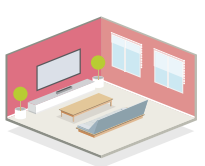
The World Health Organisation (WHO) predicts that by 2017 the majority of people would be living in more tightly packed urban areas. People would be living in smaller spaces with multipurpose rooms and furniture – a living room could double up as a dining room, study, or even a bedroom, etc. Furniture is going to have to evolve to keep pace, e.g. sofa is not just for socialising anymore, people eat and use it as their bed.
More Versatile Furniture
In a rapid urbanising world, people would have to make do with smaller spaces and less furniture. This increases the demand for more versatile furniture. Pretty soon, a stool that ordinarily serves as a spare seat might be one of the most important pieces of furniture in our house as it can be converted for other purposes such as an end table, a bedside table, a plant stand, or a step ladder.
Less storage more display
The digital age and the ubiquity of cloud computing are reducing the need for physical storage. Many things like music, movies and books that people used to have as collections are now stored almost exclusively in the cloud, resulting in young adult customers to possess fewer things physically and lead them to display the few objects they do own. People prefer open shelves and glass cabinets that allow them to show off their collections instead of chests and drawers.
Smarter furniture
As mentioned earlier, people nowadays are either connected or want to be connected all time of the day. They are more excited and curios to update add-ons too their mobile apps, add new features to their smart appliances and download the latest version of iOS. This requires more portable charging stations and wireless technology. IKEA, the Swedish furniture manufacturer, believes that smart furniture would be the trend in future homes and has started to explore the possibility of incorporating wireless technology in their furniture.
IKEA, the swedish furniture manufacturer, believes that smart furniture would be the trend in future homes and has started to explore the possibility of incorporating wireless technology in their furniture
Flat design comes to furniture packaging
In the effort to cut transportation cost consumer product companies, including furniture makers, are seeking to find ways to further flatten shipping containers and the products inside them. Researchers at MIT’s Self-Assembly Lab are developing a process that essentially allow flat material to transform, reshape and assemble themselves to take pre-designed form after shipping. The successful development of these or other materials that can transform themselves in programmed predictable ways would allow flat-packing of furniture that does not need to be constructed by either store personnel or the consumer.
Mass Personalisation
Furniture personalisation is becoming a new way for self-expression. The next big frontier in furniture design is to develop personalisation on a mass industrialised scale. Personalising mass-produced home furnishings is a major challenge and one-off furniture will be too expensive for consumers to buy. Thus, adopting a mix and match style and modular furniture might be more appealing for the modern home makers.
…an eclectic mix of accessories and furniture would replace mass production
Greater use of tactile materials
The near future of home is a tactile one, filled with weird fabrics and materials that have been custom-designed, complementing the pervasiveness and constant use of tablets, smartphones, and other handheld technology. There is a growing need for tactile sensation over the next decade as consumers will want richer and more intensively tactile materials in their non-digital lives.
MALAYSIA CURRENT AND FUTURE TRENDS OF HOME FURNISHING
According to the home survey conducted by IKEA in 2013, most Malaysians prefer a modern theme – sleek design with clean lines and material like high gloss surfaces, metal, plastic and leather. Basically, Malaysian prefers something easy to maintain and pleasing to the eyes. Malaysian also loves furniture that can easily hide mess and generally need a lot of storage space. Mixing and matching furniture is also a common practice where they look for things that are functionally fit into their homes.
According to the Harvey Norman’s advertising and promotions manager, in 2015, modern contemporary and designer-like outlook has been popular in Malaysia. Local consumers tend to be more mainstream in their home furnishing style preferences. There is also an upcoming demand for more versatile and multifunctional home furnishing as the younger generation likes the option of customising their living space according to changing mood, ambience, functionalities and different designer-like outlooks. Harvey Norman also targeting eclectic mix of furniture.
A director of Gudang’s, a homegrown company, foresees similar trend. He predicted ‘eclecticism’ – an eclectic mix of accessories and furniture would replace mass production. For the living rooms, modular, light and multifunctional combinations that come with easy customisation are very much preferred. Modern furniture pieces with modular designs will also be popular, compared to heavy and bulky ones. There is also an increase in demand for exquisite pieces such as high-gloss furniture and products with more motorised parts such as extensions and adjustable parts for easy configuration
.
References:
- http://beforeitsnews.com/business/2016/03/malaysia-furnituremarket-outlook-to-2020-growth-infurniture-export-rise-in-trend-of-onlinefurniture-sales-to-drive-future-2829000.html
- http://mtc.com.my/timbernews/malaysias-furniture-industry-where-arewe-heading-2/
- http://www.fastcodesign.com/3043407/tech-forecast/ikea-on-7-predictions-forwhat-your-home-will-look-like-in-2020)
- http://www.thestar.com.my/lifestyle/features/2014/12/10/home-furnishingtrends-for-2015/